
Shockwave Therapy
Persistent tendon or soft tissue pain can be hard to shake. Bloom combines shockwave therapy with personalized rehabilitation to support healing and lasting progress.
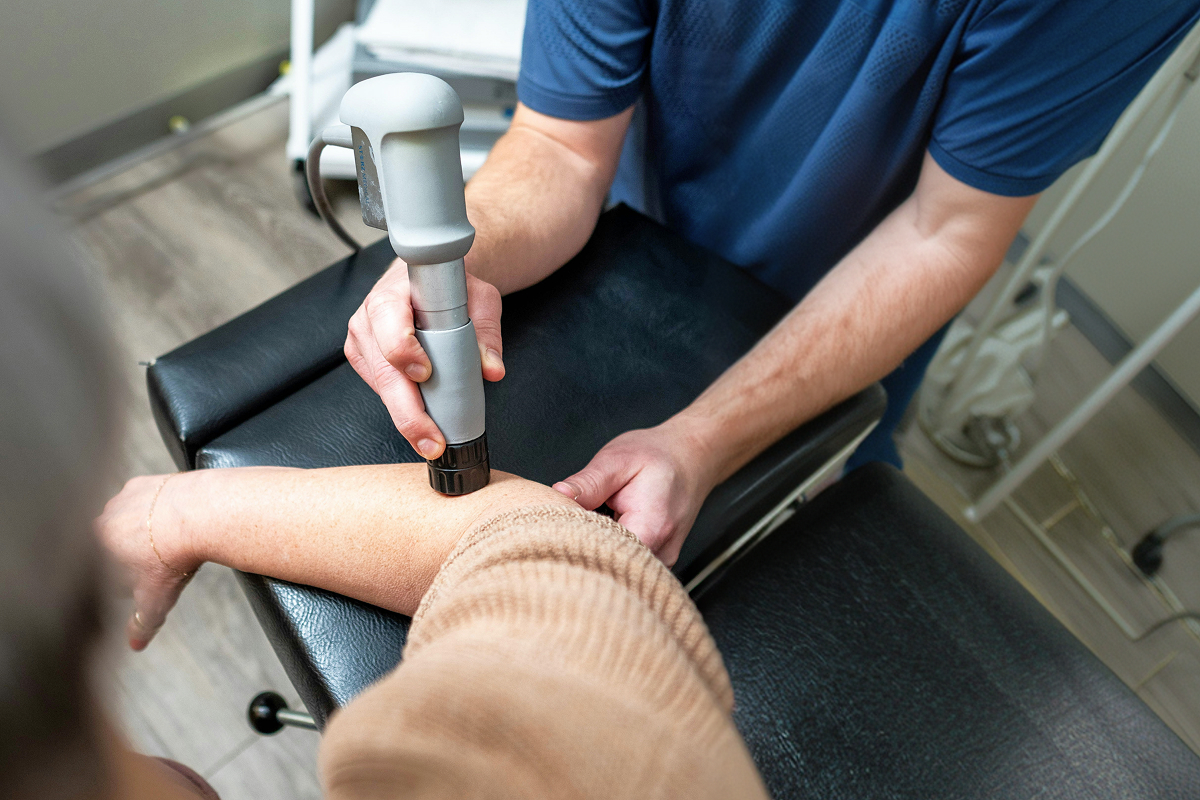
What you need to know
Shockwave therapy is a non-invasive treatment that uses controlled acoustic waves to stimulate the body’s natural healing process. It is commonly used for persistent tendon injuries, muscle tightness, scar tissue, and stubborn pain that has not responded well to rest or traditional treatment.
Rather than simply masking symptoms, shockwave therapy is designed to increase local circulation, stimulate cellular repair, and encourage damaged tissue to remodel and heal.
Conditions we commonly treat
- Plantar fasciitis
- Achilles tendinopathy
- Patellar tendinopathy, also called jumper’s knee
- Tennis elbow
- Golfer’s elbow
- Rotator cuff tendinopathy
- Gluteal tendinopathy
- Proximal hamstring tendinopathy
- Persistent muscle tightness
- Trigger points and muscle knots
- Calf tightness
- Neck and shoulder tension
- Hip flexor tightness
- Chronic muscular low-back pain
- Healed post-surgical scar restrictions
- Chronic soft tissue adhesions
- Fascial restrictions that limit comfortable movement
Your physical therapist will determine whether shockwave therapy is appropriate based on your diagnosis, medical history, and examination findings.
How does it work?
Shockwave therapy delivers controlled acoustic waves into the targeted tissue. These waves may help stimulate blood circulation, encourage new blood vessel formation, and promote collagen production, while also breaking down chronic scar tissue and calcifications, reducing inflammation, improving tissue metabolism, and decreasing pain sensitivity.
Because shockwave therapy activates the body’s normal healing response, improvement may continue over several weeks after treatment.
Evaluation comes first
Shockwave therapy is not a standalone treatment. If appropriate, it is typically included as part of a follow-up visit, once your physical therapist has completed your initial evaluation and confirmed it is a good fit for your condition. Every patient first receives a comprehensive physical therapy evaluation to determine:
- Whether shockwave therapy is appropriate and safe
- The likely source of your pain
- Whether symptoms are coming from a muscle, tendon, joint, nerve, scar, or another structure
- Which tissue should be treated
- The treatment intensity and dosage that fit your condition
Your personalized rehabilitation plan may also include:
- Movement assessment
- Manual therapy
- Therapeutic exercise and progressive strengthening
- Mobility training
- Posture and movement education
- A customized home exercise program
Shockwave therapy works best when it supports a personalized rehabilitation plan rather than being used on its own.
How many treatments will I need?
Many patients benefit from 3 to 6 shockwave sessions, typically scheduled once every 5 to 10 days. The number of sessions you need depends on your diagnosis, how long your symptoms have been present, the severity of the tissue injury, your body’s response to treatment, and your activity level and recovery goals. Persistent or more complex conditions may require additional sessions.
What does treatment feel like?
During treatment, you may experience a tapping or pulsing sensation, mild to moderate discomfort over the targeted area, and temporary soreness afterward. The intensity can be adjusted throughout the session to keep you as comfortable as possible while still delivering an effective treatment. The shockwave portion of a visit typically lasts 5 to 10 minutes, depending on the area being treated.
After your treatment
Afterward, you may notice mild soreness for 24 to 48 hours, temporary redness or tenderness, and gradual improvement over the following days and weeks.
To support your recovery, stay hydrated, follow your prescribed exercises, and avoid unusually strenuous activity involving the treated area for 24 to 48 hours. We also recommend avoiding anti-inflammatory medications such as ibuprofen or naproxen for 48 hours unless directed otherwise by your physician, as they may interfere with the intended healing response.
Is shockwave therapy right for me?
Shockwave therapy is often most appropriate for persistent conditions that have lasted for several months or have not improved with rest or previous treatment. It may not be appropriate for everyone, including people who:
- Are pregnant when treatment would be applied over the affected area
- Have certain bleeding disorders or take specific anticoagulant medications
- Have an active infection or tumor at the treatment site
- Have an acute fracture in the treatment area
- Have an open wound over the treatment area
Your physical therapist will review your medical history and examination findings to determine whether shockwave therapy is safe and appropriate for you.
Pricing
Schedule an evaluation to find out whether shockwave therapy is appropriate for your condition.